The same one-day business trip to Eilat I mentioned in a previous post gave me the taste for a fun weekend there. There is something special about the atmosphere in Eilat, it smells of holiday, relaxation and fun, the closest thing to 'abroad' without passports, borders and duty free. We flew, stayed at the Dan and dined in nice restaurants. The weather was superb, the Red Sea temperature coldish but pleasant, shop windows inviting, life's good.
At this point, I have to make yet another confession: I never bought towels. I don't know where our towels came from, but I certainly did not choose any of them. They were presents from various people/institutions for various occasions. None of them match and many of them are worn and torn. I know that good, hotel-quality towels are expensive, so I decided to do my homework: learn about the 'towel world' and survey the offering of some nearby shops, but who has time for such a grandiose project?
Elat is also a tax free zone, there is no VAT on products sold there. While strolling on the Northern beach, we came across an Arad Towels shop, well known for their quality products. Towels were the last thing I thought about buying in Eilat, but the opportunity presented itself and I decided to go with the flow. The shop was simple but elegant and the shopkeeper patiently explained the differences between the various products. I bought 8 of the most pampering towels in the shop for what seemed to me a small fortune, but still a better price than anywhere else.
By now, we finished washing them and, more importantly, disposing some old towels to make room for the new. I have yet to try the first one, but one thing I already know: plans and projects are good, but also keep your eyes open for opportunities.
Sunday, November 28, 2010
Friday, November 5, 2010
Parenting in a Changing World
I'm thinking about the 'gain/lose time' paradigm shift for quite a while and a recent piece of news made me put my thoughts in writing. A 26-years old man stabbed his mother to death and his 38-year old brother to near death because 'they had been pressuring him to find a job'.
When I was only 5 years old, my parents filed a petition with the authorities to let me begin school before I was 6. In line with the contemporary thinking (socialist materialism), this would make me gain a year. Not sure what the repercussions of this move were. Throughout my school years I was always the smallest in class, always had older friends. Perhaps another year would have given me more mental strength to cope with the world, especially socially. With the subjects taught I had no problem, always being among the top pupils in my class.
In older times, youngsters staid with their parents until married. Then came the first shift: until 10-15 years ago, most youngsters were eager to leave their homes and start their own independent life. Nowadays, there is an opposite trend. Youngsters start their 'lives' much later, taking their time to travel, to decide what to do next, to study something they like, to study something practical, to find a real job, to marry and bring children into the world. By this time they are 30 something, almost 40. And where should they rush to? 30 years of commitment and mortgage payback? More work years? There is plenty of that until the new retirement age of 67. (I admire and envy the French protest against changing retirement age from 60 to 62, not to mention their short work week and long vacations.)
Except for a few basic truisms, life and perceptions have changed so much that it's pathetic to think that what worked for us 30 years ago is relevant advice for our children. Does a full time job for a large brick-and-mortar corporation make them happier than Internet-based freelancing? City life and traffic jams or country home and organic tomatoes? Government and politics or high-tech? Life-long marriage with compromises or excitement hunting? And what's the right balance between volunteering and saving the world, and minding your own business?
Only they can define their own happiness.
Saturday, October 30, 2010
Over-Simplistic Comparison
Going back to the Georgia-Armenia trip, as I have some unfinished business with my avid readers. (I don't have stats on my blog, but I suspect there must be at least 2). The many visits in churches, synagogues and a mosque led me to an over-simplistic comparison between these religions.
In a synagogue, the prayers face the Holy Ark housing Torah Scrolls. These contain lots of texts (no pictures) that Jews are expected to continuously learn and question and also keep the 613 commandments of the Pentateuch. Tiring.
In a church, the prayers face icons of Jesus and Mary (pictures, no text). No need to read, learn or question (or even understand the Latin prayer). Christians are expected to believe what they are told: the best cover story in history of a woman who committed adultery. (I'm expecting the Vatican death squads to be on their way...)
In a mosque, the prayers face the qiblah wall and thus face Mecca, the location of the Kaaba. In the qiblah wall, usually at its center, is the mihrab, an empty niche or depression indicating the direction of Mecca. Basically, Muslims are being shown the way to Mecca to go there on pilgrimage and help the local trade.
In a synagogue, the prayers face the Holy Ark housing Torah Scrolls. These contain lots of texts (no pictures) that Jews are expected to continuously learn and question and also keep the 613 commandments of the Pentateuch. Tiring.
In a church, the prayers face icons of Jesus and Mary (pictures, no text). No need to read, learn or question (or even understand the Latin prayer). Christians are expected to believe what they are told: the best cover story in history of a woman who committed adultery. (I'm expecting the Vatican death squads to be on their way...)
In a mosque, the prayers face the qiblah wall and thus face Mecca, the location of the Kaaba. In the qiblah wall, usually at its center, is the mihrab, an empty niche or depression indicating the direction of Mecca. Basically, Muslims are being shown the way to Mecca to go there on pilgrimage and help the local trade.
Friday, October 29, 2010
Bag Story
About 2 weeks ago, I flew to Eilat for one day, for business. Since it was a one-[long]day trip, I just took my black office case with me, an oldish leather bag bought by my husband in the US a few years ago. Maintenance not being one of my strong points, the bag became kind of shabby. When you see something (or someone!) every day, you get used to it and your brain processes what you actually see, by adjusting it to the way it looked in the beginning. Besides, the daily changes are tiny, easy to overlook. But my fineschmecker coworker and travel partner for the day did not fall into that trap and hinted that it's time to buy a new bag.
And so the bag quest began. This time I wanted something more feminine and bright, maybe red. Looked on the net, went to some shops, saw some interesting (mostly not) models and almost gave up - forgot to mention shopping is also one of my weak points, I lose interest fairy quickly and rarely buy stuff for myself.
And so, like in all good stories, in the last shop, just before giving up, I found a non-feminine, brown Hedgren bag (never heard about this firm before), with hidden back straps for when the bag gets too heavy to hand-carry or you need free hands. It also features a padded laptop compartment, place for cellphone, pen and such, hidden handles for hand-carrying, detachable and adjustable shoulder strap, smooth zippers, and water-resistant shell. Practical, but kind of ugly.
Did it happen to you that you went shopping for an item with a predefined list of features, then saw a real one that just clicked with you and decided to take it anyway, features or not? I bet it's the same with partners...You imagine a tall handsome smooth talker with blond curly hair and blue eyes, but end up with a short, shy, squint, bald man, who is actually a good, sincere person and a good match.
After a few days in use, I started having second thoughts. Why do I need the laptop compartment, it's not like I sit in trendy cafes and blog while sipping cappuccinos. Not to mention that my laptop stopped connecting to any wireless device, so what's the point in carrying it around anyway? After trying (and failing) to fix it myself, I was planning to have a technician look at it, but decided to show it to someone at work first. I placed it in the padded compartment, together with some accessories, but could barely lift the bag. You guessed right what happened next: the shoulder straps absolutely saved me. And the person at work, too. After 2 minutes he realized that a button accidentally pressed shut down the wireless connection.
Here's to practical choices.
And so the bag quest began. This time I wanted something more feminine and bright, maybe red. Looked on the net, went to some shops, saw some interesting (mostly not) models and almost gave up - forgot to mention shopping is also one of my weak points, I lose interest fairy quickly and rarely buy stuff for myself.
And so, like in all good stories, in the last shop, just before giving up, I found a non-feminine, brown Hedgren bag (never heard about this firm before), with hidden back straps for when the bag gets too heavy to hand-carry or you need free hands. It also features a padded laptop compartment, place for cellphone, pen and such, hidden handles for hand-carrying, detachable and adjustable shoulder strap, smooth zippers, and water-resistant shell. Practical, but kind of ugly.
Did it happen to you that you went shopping for an item with a predefined list of features, then saw a real one that just clicked with you and decided to take it anyway, features or not? I bet it's the same with partners...You imagine a tall handsome smooth talker with blond curly hair and blue eyes, but end up with a short, shy, squint, bald man, who is actually a good, sincere person and a good match.
After a few days in use, I started having second thoughts. Why do I need the laptop compartment, it's not like I sit in trendy cafes and blog while sipping cappuccinos. Not to mention that my laptop stopped connecting to any wireless device, so what's the point in carrying it around anyway? After trying (and failing) to fix it myself, I was planning to have a technician look at it, but decided to show it to someone at work first. I placed it in the padded compartment, together with some accessories, but could barely lift the bag. You guessed right what happened next: the shoulder straps absolutely saved me. And the person at work, too. After 2 minutes he realized that a button accidentally pressed shut down the wireless connection.
Here's to practical choices.
Sunday, October 24, 2010
Change - Yet Again
You do everything to the best of your abilities, even have some nice plans for the future. Suddenly the other party (your boss/friend/partner/body) fundamentally breaches your unwritten agreement. He/she/it is not there for you anymore. The change is out of your control, yet you suffer the consequences. You blame yourself for not noticing the symptoms. Too late for that, the change would have come sooner or later. You are never really ready for it anyway. You remember that time heals almost everything, but until that happens, use these tips. They may (or may not) help.
- Rationalize - the matter is out of your control, there is nothing you can do anyway, let the time pass.
- You know the 'why me' type whining is not helpful, so don't.
- Occupy your time with activities (time passes faster that way), but don't try to read a book. You can't concentrate anyway.
- Even if you feel like being alone, resist the temptation. Have a good talk with a friend instead.
- Do some physical exercise you enjoy (walk, swim, etc.).
- Take a massage, bathe in a jacuzzi or indulge in some other body pampering that works for you.
- Listen to/play music or sing.
- Stay away from comfort food.
- Count your blessings.
- Write a blogpost about coping with negative changes.
Sunday, October 17, 2010
And Now for Something Completely Different
This year we didn't feel like planning our vacation, so we decided to take an organized tour with everything being taken care of and us being served. We strongly dislike organized tours, but some places really do need a lot of preparation and if you don't have a common language with the locals and the infrastructure is poor, you can experience frustrating situations. Since we compromised on the organization, we decided to go for the best tour operator, the Geographic Society (an excellent decision, in retrospect). They did a wonderful job and I certainly recommend both the operator and our amazing guide Dr. Chezy Shaked. But the organization was not the only difference this year, as we also decided to visit a close (2.5h flight) but less known area, the Caucasus. Why? Because we couldn't afford the tour to the Galapagos Islands or Madagascar and also because the Caucasus is different than any place we have visited before. It is a troubled region between the Black and Caspian seas, home to more than 50 ethnic groups, many enclaves and a 'neighborhood bully'.
It is very interesting to compare Georgia and Armenia, the two countries we visited. Both are Christian, Armenia being the first country that took on Christianity as state religion in 301 A.D. Both have their own alphabet (none of them use Cyrillic letters) and language, both were under Soviet occupation (and many others before) and gained their independence in 1992. Since then, they took different paths.
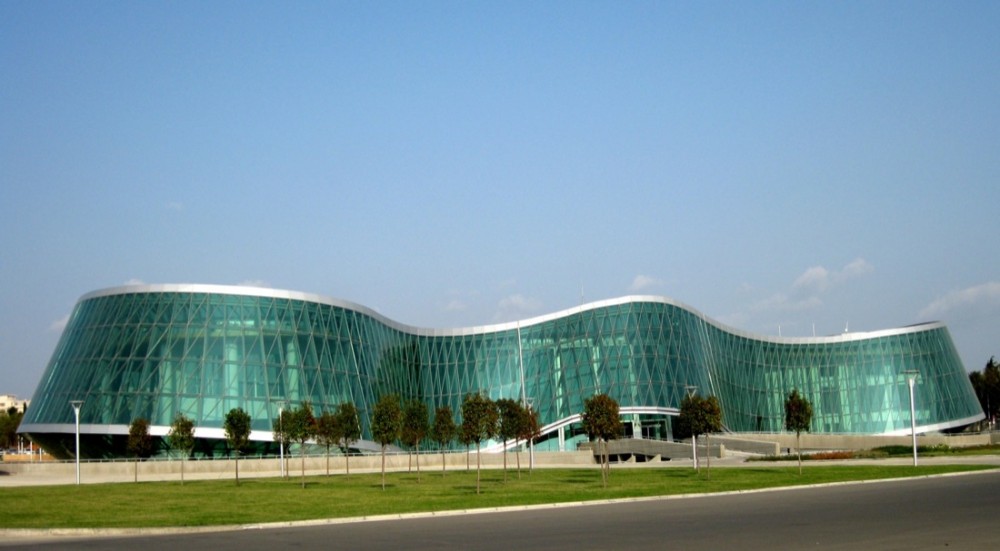
Georgia's goal is westernization. Its young and popular president, Saakashvili, prefers western-educated, young civil servants with computer skills. He has targeted corruption in his first year of office. To that end, he revamped the police force by firing all of the traffic police in his country in one day, cutting 30,000 police officers from the payroll. The new police station in Tbilisi is a beautiful, modern glass building symbolizing transparency. All other police stations being built around the country also feature glass walls. Georgia's foreign policy focuses on the USA ans NATO, but being a small country in a strategic geographical location for Russia, it is limited in the actions it can take. The Russians demonstrated how their slap felt on the Georgian wrist during the last war in 2008. The fear from Russians is very much a Georgian reality, as proved by a TV program that showed a fake newscast of a Russian invasion. The show, preceded by a disclaimer but with no disclaimer during the broadcast itself, caused panic, rushes on banks, stores and gas station and even a few heart attacks and other medical emergencies, and anger at the government for perpetrating the hoax.
Georgia's infrastructure is quite poor. Roads are full of holes, cows and other obstacles, and lack asphalt. Some remote locations are cut off for 6 months during winter. When returning from such a region after a rainy night, at one point all vehicles had to stop in a sea of mud and wait until a car was pulled out of mud by a tractor. Georgians are religious, hospitable, musical and overweight. National food staples include khachapuri (cheese-stuffed bread), khinkali (cooked, oversize dim-sum), lots of nuts, cilantro and wine. Although Georgia is the oldest wine-producing region in the world, traditional Georgian grape varieties are little known in the West. Georgian wines are classified as sweet, semi-sweet, semi-dry, dry, fortified and sparkling. The semi-sweet varieties are the most popular.
At the Georgian-Armenian border (a typically third world place), we had to switch buses and drivers. We left the small Georgian bus with narrow seats, and driver Misha and his belly, who expertly slalomed between holes and cows, while speeding and overtaking everything and hooting at the same time, and got a big, comfy Armenian bus with a fit driver in a button-down shirt and a necktie. Armenian roads are much better and Yerevan, planned by architect Alexander Tamanyan, is a surprisingly beautiful city. The building facades are made of the local pink tuff stone, richly ornamented with intricate stone-work patterns. In the city center, young people with laptops sip cappuccinos in fashionable cafes among super-expensive shops selling Western brands. Unlike Georgia, Armenia has many flower shops, cats and accepts credit cards. People are better dressed, but we are not talking about Parisian chic here.
With its 3.2M population (descendants of the Urartu empire) and at least a twice as large diaspora (contributing to the economy), Armenia is under heavy Russian influence, with more than 70% of its products being exported to Russia. Depending on Russia is not such a bad idea when your eyes are on the Ararat mountain (literally) and lake Van (in today's Turkey), and lake Urmia (in today's Iran), you are a small Christian country surrounded by Muslim neighbors and suffer from frequent earthquakes.
Unlike Georgians who eat way too much (you never know if the course they served is the last one before dessert), Armenians eat 3-course meals, are musical (the Garni quintet we heard in the Garni pagan temple left me with my jaw dropped - literally) and arty (Sergei Parajanov's museum proves there are no borders to creativity). While the most famous Georgian is Stalin (I heard here pianist Alexander Korsantia and learned there about poet Shota Rustaveli, the author of 12th century epic poem "The Knight in the Panther's Skin"), the most famous Armenian is Charles Aznavour, along with Aram Khachaturian, Andre Agassi, Cher, Garry Kasparov, Emile Lahoud and many others. BTW, I saw Emil Lahoud's tree in the garden of the Armenian Genocide museum.
We visited many churches, some synagogues and even a mosque, but the most touching site was a small 12th century Jewish cemetery, with the Hebrew inscriptions readable and the language understandable after almost 1000 years.
Only time will tell which country will succeed on the long run, multi-challenged Georgia with its clearly defined goals, living in Russia's intimidating shadow or realpolitk-practicing tiny Armenia.
It is very interesting to compare Georgia and Armenia, the two countries we visited. Both are Christian, Armenia being the first country that took on Christianity as state religion in 301 A.D. Both have their own alphabet (none of them use Cyrillic letters) and language, both were under Soviet occupation (and many others before) and gained their independence in 1992. Since then, they took different paths.
Georgia's goal is westernization. Its young and popular president, Saakashvili, prefers western-educated, young civil servants with computer skills. He has targeted corruption in his first year of office. To that end, he revamped the police force by firing all of the traffic police in his country in one day, cutting 30,000 police officers from the payroll. The new police station in Tbilisi is a beautiful, modern glass building symbolizing transparency. All other police stations being built around the country also feature glass walls. Georgia's foreign policy focuses on the USA ans NATO, but being a small country in a strategic geographical location for Russia, it is limited in the actions it can take. The Russians demonstrated how their slap felt on the Georgian wrist during the last war in 2008. The fear from Russians is very much a Georgian reality, as proved by a TV program that showed a fake newscast of a Russian invasion. The show, preceded by a disclaimer but with no disclaimer during the broadcast itself, caused panic, rushes on banks, stores and gas station and even a few heart attacks and other medical emergencies, and anger at the government for perpetrating the hoax.
Georgia's infrastructure is quite poor. Roads are full of holes, cows and other obstacles, and lack asphalt. Some remote locations are cut off for 6 months during winter. When returning from such a region after a rainy night, at one point all vehicles had to stop in a sea of mud and wait until a car was pulled out of mud by a tractor. Georgians are religious, hospitable, musical and overweight. National food staples include khachapuri (cheese-stuffed bread), khinkali (cooked, oversize dim-sum), lots of nuts, cilantro and wine. Although Georgia is the oldest wine-producing region in the world, traditional Georgian grape varieties are little known in the West. Georgian wines are classified as sweet, semi-sweet, semi-dry, dry, fortified and sparkling. The semi-sweet varieties are the most popular.
With its 3.2M population (descendants of the Urartu empire) and at least a twice as large diaspora (contributing to the economy), Armenia is under heavy Russian influence, with more than 70% of its products being exported to Russia. Depending on Russia is not such a bad idea when your eyes are on the Ararat mountain (literally) and lake Van (in today's Turkey), and lake Urmia (in today's Iran), you are a small Christian country surrounded by Muslim neighbors and suffer from frequent earthquakes.
Unlike Georgians who eat way too much (you never know if the course they served is the last one before dessert), Armenians eat 3-course meals, are musical (the Garni quintet we heard in the Garni pagan temple left me with my jaw dropped - literally) and arty (Sergei Parajanov's museum proves there are no borders to creativity). While the most famous Georgian is Stalin (I heard here pianist Alexander Korsantia and learned there about poet Shota Rustaveli, the author of 12th century epic poem "The Knight in the Panther's Skin"), the most famous Armenian is Charles Aznavour, along with Aram Khachaturian, Andre Agassi, Cher, Garry Kasparov, Emile Lahoud and many others. BTW, I saw Emil Lahoud's tree in the garden of the Armenian Genocide museum.
We visited many churches, some synagogues and even a mosque, but the most touching site was a small 12th century Jewish cemetery, with the Hebrew inscriptions readable and the language understandable after almost 1000 years.
Only time will tell which country will succeed on the long run, multi-challenged Georgia with its clearly defined goals, living in Russia's intimidating shadow or realpolitk-practicing tiny Armenia.
Friday, September 10, 2010
Two Wrongs Don't Make a Right
In a previous post, I was outraged by the racist discrimination in a girls' school in the religious settlement of Emanuel. I am still outraged. The compromise achieved after the Supreme Court's ruling was that one of the communities will build its own private school, where it can [and will] decide who gets admitted to study. This means the segregation will continue and the problem was in fact swept under the carpet rather than solved.
A few days ago, ultra-religious deputy health minister Jacob Litzman suggested applying the Emanuel 'solution' to the theater actors' boycott of Ariel. Theaters that refuse to perform in Ariel will be denied state funding (private theaters can decide for themselves where to perform). The underlying principle, according to Litzman, is that the state may have a say only when it pays the bill – one of the stupidest statements I ever heard.
Never mind how the ultra-religious use and twist every wrong to make it beneficial to their cause, let's concentrate on the role of the State. The State (through legislators) defines what is right and wrong and changes the definition from time to time, as society mores evolve. A fundamental wrong is wrong regardless by whom it is committed, state-funded establishment, private person, or group. Racist discrimination is wrong, Mr. Litzman, even in private schools.
As for the Ariel boycott, it reminds me of the following joke: Two Jews are stranded on a desert island. They build three synagogues - one for the orthodox Jew, one for the reform Jew, and one that neither one of them will ever set foot in!
A few days ago, ultra-religious deputy health minister Jacob Litzman suggested applying the Emanuel 'solution' to the theater actors' boycott of Ariel. Theaters that refuse to perform in Ariel will be denied state funding (private theaters can decide for themselves where to perform). The underlying principle, according to Litzman, is that the state may have a say only when it pays the bill – one of the stupidest statements I ever heard.
Never mind how the ultra-religious use and twist every wrong to make it beneficial to their cause, let's concentrate on the role of the State. The State (through legislators) defines what is right and wrong and changes the definition from time to time, as society mores evolve. A fundamental wrong is wrong regardless by whom it is committed, state-funded establishment, private person, or group. Racist discrimination is wrong, Mr. Litzman, even in private schools.
As for the Ariel boycott, it reminds me of the following joke: Two Jews are stranded on a desert island. They build three synagogues - one for the orthodox Jew, one for the reform Jew, and one that neither one of them will ever set foot in!
Subscribe to:
Posts (Atom)