Seven years ago, Tali, the daughter of our best friends, brought her boyfriend Alex to a friends' picnic. Most of us pretty much ignored the boy, thinking there will probably be other, more serious boyfriends. Besides, he didn't speak Hungarian - a major deficiency in our group. Yesterday we attended their wedding.
Special wedding is almost an oxymoron. Weddings tend to follow patterns: the rabbi trying to humor up the ceremony with witty comments, people, food, music and dancing. So what made Tali and Alex's wedding so lovely? Nice location (a kibbutz garden in the North not prohibitively far away from us), not too many people (pleasant schmoozing with old acquaintances), not too much food, in short, just the right balance of everything. At some point we even had the bride and groom sitting and eating at our table for a few precious moments.
Wishing this couple a long and happy life together, good health and prosperity.
Tuesday, September 25, 2012
Saturday, September 22, 2012
Sugar Plus
Tom reported about a second incident of groats in our demerara sugar pot. "My coffee had groats in it, then in a hurry I made another one with white sugar that turned out to be salt." He spat out the first sip in an instant and ended up leaving the house without his morning coffee.
In order to fully understand this, you should know:
1. That I only buy demerara sugar that comes in transparent containers
2. The groat incident from last Passover.
Last Passover after the meal, we were serving coffee. The sugar pot was on the table and our guests started sweetening their coffees. They tasted the coffee and looked puzzled. It wasn't sweet. I explained that brown sugar is less sweet than white, so they added some more. The "sugar" didn't melt, the coffee was still not sweet and undefined brownish material started aggregating at the bottom of the cup. With the guests half worried about possible poisoning, I rushed to the kitchen for a quick investigation and concluded that hubby added groats to the sugar. The groats were stored in a container that previously contained sugar and they looked similar to his kitchen-untrained eyes. The incident finished with relief, much laughter and embarrassment and a fresh round of coffee with groat-less sugar.
Since then, I finished all my groat stock and didn't buy anymore, so I was positive the sugar could not possibly contain any. This time it was couscous. How it got into the sugar container is still a mystery.
When I open a package of dry food (rice, pasta, whatever) that comes in a paper or nylon bag, I like to store the remaining contents in tightly closed Tupperware or glass containers. I store different types of flour in identical Tupperware containers and I put a little label (cut out from the original paper bag) inside the container, so I can reuse the containers for different contents without worrying about external labels glued to them. As a lesson learned from the groat incident, I added a little label for salt in a former sugar container. Hubby thought that wasn't enough and glued an additional big fat label on the outside as well.
But when in a hurry, who has time to look at labels? Not to mention applying logic before the morning coffee.
In order to fully understand this, you should know:
1. That I only buy demerara sugar that comes in transparent containers
2. The groat incident from last Passover.
Last Passover after the meal, we were serving coffee. The sugar pot was on the table and our guests started sweetening their coffees. They tasted the coffee and looked puzzled. It wasn't sweet. I explained that brown sugar is less sweet than white, so they added some more. The "sugar" didn't melt, the coffee was still not sweet and undefined brownish material started aggregating at the bottom of the cup. With the guests half worried about possible poisoning, I rushed to the kitchen for a quick investigation and concluded that hubby added groats to the sugar. The groats were stored in a container that previously contained sugar and they looked similar to his kitchen-untrained eyes. The incident finished with relief, much laughter and embarrassment and a fresh round of coffee with groat-less sugar.
Since then, I finished all my groat stock and didn't buy anymore, so I was positive the sugar could not possibly contain any. This time it was couscous. How it got into the sugar container is still a mystery.
When I open a package of dry food (rice, pasta, whatever) that comes in a paper or nylon bag, I like to store the remaining contents in tightly closed Tupperware or glass containers. I store different types of flour in identical Tupperware containers and I put a little label (cut out from the original paper bag) inside the container, so I can reuse the containers for different contents without worrying about external labels glued to them. As a lesson learned from the groat incident, I added a little label for salt in a former sugar container. Hubby thought that wasn't enough and glued an additional big fat label on the outside as well.
But when in a hurry, who has time to look at labels? Not to mention applying logic before the morning coffee.
Wednesday, August 15, 2012
Conversations
Here are two things I hate in conversations: people talking mostly about their illnesses (usually older people, touched on this in a previous post) and people continuously talking about themselves and not listening to you or being interested in you.
Recently we lunched in a very nice steak restaurant with friends and family. On the way back, Peter asked me to summarize the event (something we usually do) and I said the food was very good. He agreed.
Would have been nice for the person we invited for lunch to at least thank us. That's the third thing I hate.
Recently we lunched in a very nice steak restaurant with friends and family. On the way back, Peter asked me to summarize the event (something we usually do) and I said the food was very good. He agreed.
Would have been nice for the person we invited for lunch to at least thank us. That's the third thing I hate.
Saturday, July 28, 2012
Healthy Involvement?
I got an email from my health fund. Based on data in my file, they recommend that I undergo different tests to keep things under control. I thought that is very very nice of them. I like the idea of preventive medicine, so I decided to take 2 of the tests they suggested.
After some minor difficulties with the appointment (went to the wrong branch, but got admitted anyway), and after being done with the tests, the nurse looked at my file and suggested I take a pneumonia shot. Since I never heard about this vaccination before, I told her I want to read about it on the net, before deciding. As I mentioned in a previous post, I don't like taking decisions on the spot, especially regarding matters I don't have enough information about. But she didn't give up: "It prevents you from being hospitalized and lying with high fever on an overcrowded hospital corridor ". So then the real reason for the shot is not to avoid illness, but to ease the medical staff's work (how about adding more beds and staff, huh?). When she said "at your age", I stopped listening. The nurse wrote "The patient refused to take the [...]" in my file. What's next? Being ambushed by two gorillas and vaccinated against my will?
While right-wing US citizens think that forced health care insurance is anti-constitutional, most Israelis enjoy its benefits. The vast majority of our hypochondriac nation even buys additional health insurances from the health fund and private ones as well, to extend the basic coverage, which is less than it used to be before the health insurance law was passed in 1995, but costs more.
After reading some articles on the net, I discovered that the pneumonia shot is inefficient. The main reason for its popularity is the manufacturer's successful marketing activity and health fund branches administering it in high numbers are rewarded internally. Need I say more?
On that happy note, here is a real SMS I got from the vet:: New! Early detection of illness in your cat by discounted geriatric tests".
After some minor difficulties with the appointment (went to the wrong branch, but got admitted anyway), and after being done with the tests, the nurse looked at my file and suggested I take a pneumonia shot. Since I never heard about this vaccination before, I told her I want to read about it on the net, before deciding. As I mentioned in a previous post, I don't like taking decisions on the spot, especially regarding matters I don't have enough information about. But she didn't give up: "It prevents you from being hospitalized and lying with high fever on an overcrowded hospital corridor ". So then the real reason for the shot is not to avoid illness, but to ease the medical staff's work (how about adding more beds and staff, huh?). When she said "at your age", I stopped listening. The nurse wrote "The patient refused to take the [...]" in my file. What's next? Being ambushed by two gorillas and vaccinated against my will?
While right-wing US citizens think that forced health care insurance is anti-constitutional, most Israelis enjoy its benefits. The vast majority of our hypochondriac nation even buys additional health insurances from the health fund and private ones as well, to extend the basic coverage, which is less than it used to be before the health insurance law was passed in 1995, but costs more.
After reading some articles on the net, I discovered that the pneumonia shot is inefficient. The main reason for its popularity is the manufacturer's successful marketing activity and health fund branches administering it in high numbers are rewarded internally. Need I say more?
On that happy note, here is a real SMS I got from the vet:: New! Early detection of illness in your cat by discounted geriatric tests".
Saturday, July 14, 2012
Tile Tale
mosaic studio owner (remember the post about the mosaic?), Peter found out how to clean dirty grout: with toothbrush and citric acid. This really tedious work consists of applying the acid with a toothbrush, then removing it so the acid "eats" the dirt on the surface but not the grout itself, then apply sealer, leave it to dry and apply a second layer of sealer.
OK, so now the grout was clean, but with holes in it (the construction workers did a really sloppy job). He marked the holes with dark pieces of tape, cleaned them, filled them with new grout (this reminded me of filling dental cavities), removed the surplus from the tiles and applied 2 layers of sealer. Crazy work. I helped a bit with the sealer, Tom helped more. This went on during a few Saturdays.
If we'd knew then (when the tiles were laid), what we know now (that there is a method of laying the tiles very close to each other, without grout), we could have saved all this. Why is it that you don't get experience until just after you need it?
Saturday, June 16, 2012
Super-jeweler
After years of not wearing any jewelry, I started off by setting some old stones I got, in casual pieces. After years, the inlays got loose and I lost a few small stones, a ring cracked, another ring I inherited from my late mother in law was too small and so slowly but surely I got to the no-wearable-piece point. Searched and searched for jewelers to fix my old pieces, but nobody wanted or could deal with them.
In my frustration, I bought a silver ring with a yellow stone and casually asked at the shop (behind which Bili Silver Jewelry manufactures tasteful silver designs) if they knew anyone who could help. They gave me a name and told me to google it. This is how I found Maziar Yeshurun, an Iranian Jew owning a business next to the Diamond Exchange in Ramat Gan, who turned out to be THE expert in the field as he wrote the textbooks and also teaches courses in this field.
After being amazed by the myriad of different tools at his place (Maziar is a heavy tool collector), a wonderful story unfolded as he and Peter (a tool collector himself) kept talking. Turned out that in the early 80s, Maziar worked at Tenim Ltd. (a Tel Aviv firm that sold equipment and supplies for jewelers and watchmakers) to finance his studies. Tenim was owned and managed by the resourceful Missis Tannenbaum, a remarkable Hungarian Jewish lady, who managed to free her family
during WWII, by bribing their Nazi keepers with solid gold bars. According to their deal, the bribed Nazis turned a blind eye to her family members swimming out of the ghetto in up-to-the-chin raw sewage.
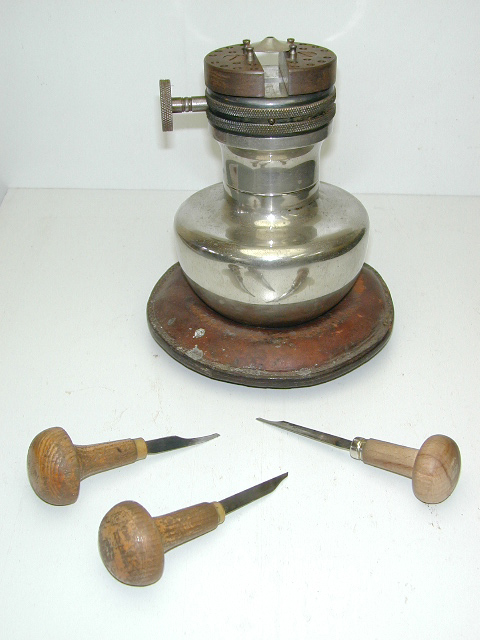
During the same period (80s), Peter was an oleh hadash (new emigrant) in Dimona, a godforsaken desert town in the South of Israel, attending Ulpan (intensive Hebrew school). His uncle, Lebovits Andres, worked for Tenim as an accountant. To help Peter, he suggested him to contact Meir Schwartz, a Romanian Jew owning a watch and clock shop in Dimona, who used to come to Tenim once a week for buying supplies for his shop. Peter befriended Meir and his family and made his first, modest income by fixing radio clocks for Meir and later learned how to fix clocks and watches too. After leaving Dimona, Peter visited his uncle at Tenim frequently and even bought an expensive engraver's ball he used maybe once.
With two things is common- tools and Tenim - Peter and Maziar were unstoppable. Maziar kept telling us how modest and wise Missis Tannenbaum was, how he enjoyed his years at the firm and loves everything Hungarian ever since. Peter got all nostalgic about tools, and mutual respect between the two occurred in an instant. I slipped into the secondary, supporting role, but hey, at least all my jewelry is now professionally renewed.
In my frustration, I bought a silver ring with a yellow stone and casually asked at the shop (behind which Bili Silver Jewelry manufactures tasteful silver designs) if they knew anyone who could help. They gave me a name and told me to google it. This is how I found Maziar Yeshurun, an Iranian Jew owning a business next to the Diamond Exchange in Ramat Gan, who turned out to be THE expert in the field as he wrote the textbooks and also teaches courses in this field.
With two things is common- tools and Tenim - Peter and Maziar were unstoppable. Maziar kept telling us how modest and wise Missis Tannenbaum was, how he enjoyed his years at the firm and loves everything Hungarian ever since. Peter got all nostalgic about tools, and mutual respect between the two occurred in an instant. I slipped into the secondary, supporting role, but hey, at least all my jewelry is now professionally renewed.
Weekend Culinaria
We've decided to temporarily replace the weekend routine of cooking 15 boxed lunches, with eating out and making meals for just the weekend. This is how it went this weekend.
Friday
Peter heard two radio journalists speaking about a special meal they enjoyed at a beachfront Bukharian restaurant in Tel Aviv, so he ordered a table for Friday lunch. After the parking nightmare, we entered the pretty much empty place. The staff was attentive and helpful, the decor basic. The food was not remotely worth the NIS 600 they charged for our 2 samosas, 2 salads, an ethnic bread, a small platter of toof-toof kebab (fried micro-kebabs and fresh onion slices in a pool of oil and vinegar), 4 desserts, a bottle of label-less white wine and a coke. Green tea on the house.Saturday
Even though I very rarely eat (at least I try) or buy potatoes, found myself with a sackful, never mind why. Peter came with the idea of making rösti (Swiss hash browns) and so he did. I added cold Hungarian cherry soup and zürcher geschnetzeltes (Swiss relative of beef stroganoff). To complete the experience, we finished the leftover beetroot and horseradish salad, drank chilled white wine and ended the meal with some Swiss chocolate. Green tea will be served later.
Subscribe to:
Posts (Atom)