Monday, May 17, 2021

Metal Age

In the current round (lately we don’t have wars, “just” rounds like in boxing matches), the central area of Israel where I live was targeted several times by Hamas missiles. So why do I feel lucky? Because areas closer to the border with Gaza are pummeled by Hamas rockets for years, whereas the central area is targeted much less. Also, Southern residents have only 15 seconds to run to a shelter after the air raid alarm goes off, whereas we have 45, which makes a big difference. Literally, life and death. Our apartment has a safe room made of concrete, with an iron window and steel door to protect us, but older buildings have either a common underground shelter (which you need to reach in seconds!) or just a staircase or inner room that can be used as a shelter. Plus, Israel’s miraculous Iron Dome system intercepts rockets and destroys them in mid-air with a 90% accuracy. But all these facts are pretty much known by now by my family and friends abroad.

I will now try to describe how it feels to live through these rounds from my own perspective. First of all, work goes on as usual. Through all the recent wars and rounds, Israel has continued to supply products to customers abroad. Production must go on and deadlines must be met. Employees of essential facilities go to work, or work from home (thanks to Covid, this is now much easier than before). Most facilities have shelters. When the air raid alarm goes off, employees take shelter, wait 10 minutes for the last piece of shrapnel and debris to fall and then continue working, if not directly hit. Kind of reminds you of the London Blitz, right?

The sound of the air raid alarm is a weeping-blood rushing-frightening one. During a round, my ears are constantly and actively listening to background noises. Sounds such as an accelerating car or motorcycle are always suspicious, not to mention police, ambulance or fire truck sirens, which can be confusing for the first second until my mind categorizes them as unharmful. In the background, we hear distant missiles as far as Ashdod, which is about half an hour drive to the South. In the secure room, we clearly hear the falling missiles, as well as the screeching sound of the anti-missiles being launched. Lately, I also observed my body language in the secure room: I sit hunched up with my head down, as if waiting for a missile to fall on my head.

If you are in the car during the alarm, you should stop the car, get out and run to a nearby shelter. If there is no shelter nearby, lay on the ground with your hands protecting your head. Same goes for buses. It happened to most of us, myself included, when I walked in a park. Not fun, but at least I could watch the missiles “kissing”.

Since the alarm can go off at any time of day or night, I take short showers, don’t take unnecessary trips, and I’m always mindful of essential items (like my mobile phone) to take with me to the safe room. Last time, I was in the middle of lunch, so I took a bowl of cabbage salad with me, although I’m pretty sure it wasn’t essential J. In the safe room, we check our phones to find out where the rockets hit and make sure all family members are safe. After waking up, we also check the news apps to keep up to date with developments we might have missed while sleeping.

I have a recurring video looping in my head about opening the safe room door and not being able to step out, because there is nothing to step on, the entire apartment being blown up by a missile. Could you imagine losing your home? Hard, isn’t it? Yet it did happen to some Israelis and I could be next. Even though I insisted on adding an anti-missile coverage to our home insurance (yes, there is such a thing) years ago, and the authorities are quite efficient with assessing the damage and providing you a place to sleep, it could take months till your home is repaired or rebuilt and you have no belongings. Again, not fun.

On top of the above “not fun”, this round brought us a new development, potentially even more worrisome than the round itself. In mixed cities (where Arabs and Jews live together), you can be attacked or your business or home or car set on fire or vandalized by a mob (usually young, unemployed or low social-economic situation extremists) just because you are a Jew or an Arab. Or your car can be hit by a deadly rock while on the road. Police claim they help only in life-threatening situations, not vandalism (which makes me and everybody else very angry). As none of the parties is going anywhere and we will have to live together after the round is over, I am not sure how this will work out.

Some people claim we should destroy Gaza completely, revoke the citizenship of the rioters and exile them. Well, about the destruction, you need to know that Israel has the military power to complete this in about 12 hours, but we act as a civilized country (as opposed to a terrorist organization), with all the ramifications, so I wouldn’t hold my breath. Same goes for revoking citizenship (ramifications, remember?). Rioters will probably be prosecuted and jailed.

And there are also the normal, compassionate human beings (whatever their religion) who help and comfort the other side no matter what and now more than ever, but of course they don’t always make it to the headlines, unless they march together and give out flowers to passersby (this happened a couple of days ago). So there is hope. Maybe.

Friends invited us to stay over at their place in the North, but for the time being the situation is bearable. Not even the southerners left their homes, so we really cannot complain. Not like in the old communist joke, at least.

So when is this round going to end, I was asked. Although our prime minister announced right at the beginning that this round will take a long time, Israelis are a pretty impatient bunch. Wars longer than 6 days J morph into a boring routine and we are already anxious to move on the next news item. By now, I think both parties are ready to stop, but being in the Middle East, they are waiting for the other party to blink first and then announce their own victory.

Saturday, July 6, 2019

Apps for life

Most apps claim to take the stress out of [fill in the blanks], while they introduce the stress of conducting your life based on best practices and expert app advice. Apps tell you what to eat based on your gut bacteria, how many steps to walk, how to manage your finances, and how to navigate to your destination. And this is just the beginning.

Slowly but surely, we become dependent on apps and unable to make decisions or take actions without them. A person losing their smart phones feels lost until replacing it with a new one and installing their favorite apps and contacts, all backed up in the cloud.

Future archaeologists will form an understanding of how we lived our lives based on data mining, piecing our digital trails together to understand our daily routines (places and events we attended, questions we googled, websites we visited, posts we read and wrote, music we listened to, goods we ordered, pictures and videos we took, etc). From all these they will deduct our worries, dreams, creativity and mindset.

If you are not yet deep into the app world, start tracking your life. You can even track your happiness and view all your data at a glance on a dashboard. Just don't forget to live your life while you are busy tracking it and making the life a future archaeologist easier.


Saturday, May 18, 2019

What happened to modesty?

If you expect this post to be about modest clothing, you can stop reading right here. Religious women are expected to wear elbow and knee covering garments and cover their hair. Personally, I don't care what other people wear, as long as I can do my own thing, and I happily missed the head scarf "scandal" during Independence Day. I find some of the tall head scarfs worn these days quite ridiculous, but I'm not a fashionista, so that's that. Back to the original subject of modesty, as in personal conduct.

Modesty used to be a core value of Israeli society, especially in its first years. Showing off your wealth was perceived as tasteless. The country was poor, socialist, and people were expected to be aligned with the ruling party values. 

In its 71 of existence, Israel absorbed millions of immigrants, won wars, overcame boycotts, opened up, developed and became the start-up nation we almost take for granted today. Values changed as well, and trash culture reached our shores. We don't despise the rich, we like to make sure their money is kosher, and most of all we like to ridicule their immodest behavior (Hebrew).

But what about our leaders? We prefer them competent and possibly modest as well. Competency is a big factor, as leading this small but complex country leaves no room for errors. Leaders' mistakes can be fatal or at least very costly. In lives. We still live in fear of decimation, the Holocaust instilled that fear so deep, that it will stay with us for generations to come. We must stay strong and keep the gates open for any Jew who decides to come, no matter the reason.

So while many of us can't stomach Mr. Netanyahu's personal conduct, he was voted for his perceived competency. And that is my 2-cent explanation of the outcome of the last elections.


Saturday, December 8, 2018

Time for a New Tagline

I wrote the tagline Constancy is the illusion created by the granularity of observing continuous change." 10 years ago when I started this blog.  It means that everything changes continuously, and what you see is a function of how often you look at it. For example, when you look at yourself in the mirror every day, you see pretty much the same thing, but when you look at a photo of yourself taken 10 years ago and compare it to what you see in the mirror, you notice the change.

So I have this new tagline on my mind, but before changing it, I came across Carol Tice's recent post about writing a good tagline for an income-generating blog. So I learned that my planned tagline is not good enough for that genre, but since my blog is therapeutic I decided to stick to it: "Different is neither positive nor negative". It attempts to combat prejudice.

When you say "these people are different than us", you subconsciously mean they are different in a negative way, that we should be careful when socializing with them, or avoid them. We have a natural tendency to be around people like us. It's easier, but then we miss the advantages of diversity. Think of diversity in terms like bio-diversity, large gene pool, different ideas, solutions, tastes, cultures. Don't go to the controversial diversity [mis]used by educational and business establishments to prefer people from certain backgrounds rather than merits. But 'different' doesn't apply only to people, but to things in general. 

Next time when you come across 'different', test yourself. Was your first thought negative, positive or neutral? 


Friday, July 20, 2018

When I Have a Cold

Since the humidity is high, we sleep with the A/C on all night. I felt my throat being cold and 2 days later, I woke up with a cactus in it. I barely finished the work day at the office with all the symptoms of a head cold: aching throat, ears, head and general weakness, and decided to listen to my body and stay home the next day to recuperate. Before going to bed, took two Acamol pills and shared the picture of the Acamol package with all my friends on Facebook, to let them know how miserable I feel.

After a mostly sleepless night, got up and got thinking. Since only my head is sick, I can do something useful with the rest of my body and not let this day be a complete waste. Decided to undertake a small project: cleaning our bedroom and on-suite bathroom. If you follow me on Facebook, you know my cleaning person went back to his country and we are now cleaning the house on our own, me being totally useless with such activities. I was lucky enough to have it done for me all my life and nobody ever taught me how to clean efficiently. I can do basic stuff, quite awkwardly though.

I remember my mom always complaining about me not helping around the house, but she didn't actually teach me, she expected me to take initiative and copy her, or maybe she tried teaching me and I wasn't interested, I really can't remember, it was very long ago. At least I'm a good cook, and even my mom said my cakes are tastier than hers. But that's because I use mixers, real ingredients and an electrical stove, none of which she ever had.

Cleaning is not one of my many talents, but how difficult can it be, right? Let's just say that a video shoot of me cleaning, would win the "clumsiest cleaner" comedy award. I started by taking out the vacuum cleaner and by the life of me, I couldn't piece it together, to use its attached tools. I was too embarrassed to admit I need to read the manual or watch a youtube video. Me? A manual? I just write them, who says I should also read them? Like in the old joke "why do cops always patrol in pairs? - because one of them can read and the other write" - I'm the one who writes.

I managed to connect the pieces in contrast to their idiot-proof design, I forgot to select the cleaning mode with the knob (I applied my "logic", without reading the small print next to the icons), but figured out (after a while!) where the on-off button was (it's foot operated!). I wondered at the many types of cleaning products we own, some with heavy, unpleasant smells. The glass shower refused to become  transparent even after many attempts, so I just gave up on that one, but the rest I was pretty happy with. With the utensils already out, I also cleaned the other toilet, vacuumed the big rug in the living room and mopped around.

By the time I finished and put everything back in place with a throbbing head, I concluded that in contrast with how effortless it looks in TV ads, cleaning is mostly an unpleasant, tiresome task and I need more practice to work out an efficient methodology. In our next episode: figuring out how to empty the vac's dust bin. Oh, and since you asked, yes, I have a robot, but it's useless for anything that is not a large area of floor or carpet.

Back to the kitchen.

Friday, July 13, 2018

Boycotts

Following the recent Barkan Winery Kosher certificate affair, some of my friends proposed to boycott the Badatz or the winery.

When individuals or organizations abroad boycott Israel, we are all up in arms, as we should be, trying to explain the underlying injustice, stupidity and antisemitism. So let me remind those quick to boycott friends the principle of treating others as one would wish to be treated.

Also, when you boycott someone, there are always innocent "bystanders" who get hurt. If you boycott a manufacturer (by refraining to buy their produce) because of business practices that are against your principles, to teach them a lesson and show that you stand up for your values, the manufacturer will eventually go bankrupt and a lot of good people will join the ranks of the unemployed. Demanding the CEO to resign is IMHO a much better move as it will only punish the policy maker, not the hard working, decent people. "Business is business" is unacceptable, so do your business (pun intended) elsewhere, Mr. CEO.

When boycotting the Badatz (by not buying produce with their kosher certificate), a lot of manufacturers may get hurt. I understand the intention to make businesses refrain from applying for this certificate as it would hurt their business (Badatz consumers are only a small group of Israeli society). If no such certificate will exist, the ultra-orthodox will either find a way to eat food with regular certificates or manufacture their own food (not such a bad idea, as it would make them contribute to the Israeli economy). However, this can be a very long process. Until then, manufacturers will lose business, lay off people and we are back to the previous scenario, but on a larger scale.

The regular milk carton we bought today in the supermarket has no less than 4 certificates. And who do you think pays all these kashrut supervisors? The consumer. And in my case, the consumer doesn't need even one, but is willing to pay for one only as a tax for living in a Jewish country.
Boycotts are like war and hatred, they have a beginning, but often no end. You can reach a stage of everybody boycotting everybody else for one reason or another until standstill. Society will look like a busy Tel Aviv junction 2 minutes after the traffic light goes off.

Let's drink some wine to fighting for our universal values in the parliament, the courts, the streets, but not in the supermarkets. And if I may chose the wine, I'd go for Golan's 2T - my new favorite. Cheers!


Friday, April 6, 2018

Food Microstories

Last week, Tom came to my office and we lunched at a Japanese restaurant. During my childhood, I had no idea what Japanese food is, or any other food that was not cooked at home. I don't remember ever going to a restaurant with my parents. Different times, different place.


We used salt, pepper and paprika as condiments. Sometimes bay leaves. I remotely heard about allspice and ginger. In Israel, a culinary heaven with so many different cuisines and endless fusion possibilities, I have and use a few dozen spices, sauces and herbs. The weirdest is Moroccan pickled lemons. At first I didn't understand the concept. Pickling is actually souring, but why sour something that is already sour? I learned that this flavorful mixture is the key ingredient in many excellent dishes.


I love to experiment in the kitchen and try out new foods, even when having guests for meals. In fact, I cook new dishes every single week. I plan the menu by reading my favorite food blogs and deciding on dishes that fit well together. Then I send the shopping list with ingredients to hubby. Friday morning, 3 boxes with groceries greet me in the kitchen. We have breakfast, and let the magic (actually hard work) begin. The variety is great, but I end up with leftovers of exotic ingredients that have a minimal chance to be used before their expiration date.


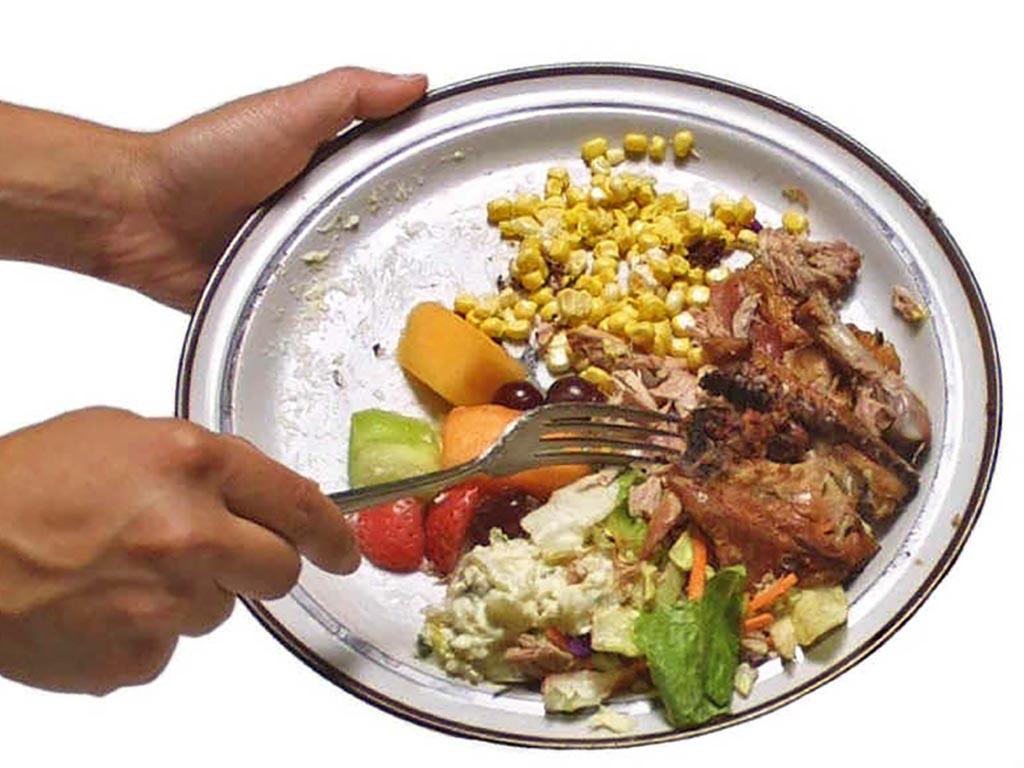
I hate wasting food. In restaurants, you pay for the waste (and even then I hate it), but in home cooking, every edible leftover is used. All the famous chefs preach using those flavor-packed juices at the bottom of a pot. They are great for making couscous or rice, for example. I am always sorry to throw out food left on plates. Many years ago, in a guesthouse, I took a serving of something that looked delicious, but it turned out to be something else and totally not tasty. I left it on the plate. The host told me off in front of all the other guests for my wasteful behavior. I felt like a reprimanded child.


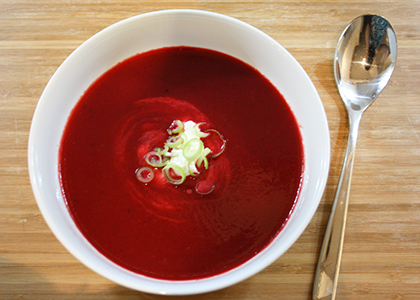
One of the traditional Passover foods of my childhood was beetroot soup. Because of its color, I mistakenly took my first bowl of beetroot soup for cherry soup. It tasted awful. Did not touch beetroot soup for years, until it occurred to me that the reason for the bad experience was my expectation for something else. Once I understood that, I started enjoying beetroot soup.


Expectation for taste or texture can also come from a dish's name. People with dietary restrictions or culinary preferences sometimes replace unhealthy ingredients with others, but keep calling the dish by the same name. The taste is usually disappointing. Why not call the dish by a different name or even better, why not create new dishes containing only healthy ingredients? Oh, did I mention I drink my coffee with almond "milk"? If "milk is a white liquid produced by the mammary glands of mammals", then what mammal produces soy milk or rice milk?

Unnatural food colors put me off. I would not eat blue food, for example. But oddly enough, I also dislike the idea of cute looking or too beautiful food. It's time consuming and wasteful, in short decadent.

Saturday, November 4, 2017

Should You Go on a Cruise?

If you haven't been on a cruise yet, you should definitely go. Unless you are an extrovert who enjoys small talk and befriending new people at every possible occasion, I recommend going with friends.

I have just returned from an 11-day Caribbean cruise (Fort Lauderdale - St. John's, Antigua - Pointe-a-Pitre, Guadeloupe,  Bridgetown, Barbados - Fort-de-France, Martinique - Castries, St. Lucia - Basseterre, St. Kitts - Half Moon Cay, Bahamas - Fort Lauderdale), that I'm trying to summarize for my undecided readers. It was a new and definitely positive experience, without the slightest motion sickness I was a bit concerned about before leaving.

The best part for me was enjoying the view, especially approaching an island, observing the land getting closer and the behemoth ship maneuvered in reverse with millimetric precision to the pier and anchored.

The Caribbean beaches with their turquoise waters and white sand pictured in brochures don't tell the full story (excluding the Half Moon Cay private island). The part they usually miss is the poor conditions in which the local population lives. Add the hot and humid climate (with occasional hurricanes), perceived lack of personal security in a tumult of taxi drivers/guides and merchants invading your private space (a western notion) and the island visits can be quite unpleasant. BTW, taxi prices drop dramatically, the further you walk from the port. 

Some practical pre-cruise advice: make sure to arrive to the starting port a couple of days before embarkation to avoid any unforeseen flight cancellations or delays. These couple of days came in handy for us as our luggage was not on the first flight, due to a sudden airport luggage strike on the first leg. For any flight, not just pre-cruise, pack one day's essentials in your hand luggage - we didn't do this and needed to shop for underwear and toiletries right after arrival. Not that there is anything wrong with underwear shopping, but there might be more interesting sites to visit than a shopping mall.

And while we are at packing, I want to refute the common belief of needing lots of elegant attires on board. The cruising industry is undergoing a major change from old world classic elegance, decor and service, to a more modern concept that appeals to younger generations it is [successfully] attracting. The industry is expanding and will continue to do so according to various analysts. So, if you are not an evening gown/black tie person, just bring whatever clothes you feel comfortable wearing, and a few elegant outfits for formal dinners (that you can BTW avoid completely, although I recommend against).

A major aspect of any cruise experience is the food. It is tasty, diverse, tempting and always around you. You will definitely gain weight, even if you have the strongest will power to avoid temptations. However, you can work out in the well-equipped gym with a fabulous view, unless you prefer the treadmill monitors instead (don't). They offer various classes as well. In addition to the many food options included in the cruise price, you can also dine in high-class restaurants, or go to coffee shops and bars.

Entertainment on board was one of my most pleasant surprises. All the performing artists were really good, be it bar pianists, classical ensembles, singers, dancers or comedians. Turns out that entertainment jobs on cruise ships are very sought-after. The on-board productions were rich and well-choreographed, with advanced use of video technology blending in the theme. 

Cruises are well-oiled machines for extracting as much money as possible from guests, a captive crowd for expensive products offered on-board, such as jewelry, art (not to my liking), alcohol, perfumes and expensive clothing. Also some on-board lectures are sales-oriented. You can gamble in the casino, get body treatments or go on shore excursions. Alternatively, you can spend time around the pool and Jacuzzis, where you will probably consume cocktail, beer or coffee.

We took two group excursions: one to rum distilleries in Barbados (guess who wanted this one) and a dolphin encounter activity in St. Kitts (the preference of yours truly). Local shopping is either in tourist-only areas or in local markets and shops, where the offering is usually [made-in-China] souvenirs, foodstuff, clothing and costume jewelry. Makes you think that the beads given to the natives by the colonialists in exchange for gold are now sold back to them for dollars and euros.  


Saturday, August 12, 2017

Optimizers

I was in the car with my family and we were debating the subject of the fastest way to the train station, based on the green light duration of en-route traffic lights. And then it hit me. We are optimizers, obsessive optimizers. We want to know the best or most cost effective approach for everything, no matter how big or small. We want to know which appartment is the best for our needs (one's biggest expense in life) and what is the fastest route for a 5-minute drive.

It makes us happy to know that with a modest input (time, money, effort), we achieved the best possible output. We got a lifetime of career based on X academic years, a great trip for a reasonable price, floorplan modification ideas that gave us the most living space, you name it.

Although in retrospective the results look rewarding, the process is quite tirsome. Optimizers dilligently gather and [over-]analyze data, and try to understand the big picture (processes), as well as the details. This task is run continuously by our minds, we rarely turn it off. Even concious decisions to let petty things go unoptimized are based on yet another optimization algorithm that wheighs the enjoyement of letting go against the perceived loss. We even optimize the size of built-in loopholes (made possible by increased personal means) in the optimization process.

But where does this all come from? A long-stretch explanation could originate in Tikkun Olam (perfecting the world), a known concept in Judaism, or the resourcefulness needed to survive and better ones's situation in adverse conditions during 2000 years of diaspora, or the competitive nature of Israelis who are always improving positions (the Hebrew source לשפר עמדות is a known phrase), or even our own struggles related to returning to our ancient homeland.

I agree, these are generalizations. You are welcome to offer additional explanations.

Saturday, December 3, 2016

Teeth

I have good, strong teeth, so how come I have fillings, caps and now an implant? When and where I was a little girl, there was very little awareness of dental maintenance (and healthcare in general). Using the same toothbrush for years was common practice, while flossing, dental hygenists and periodical checkups were unheard of. People went to the dentist if they felt pain, usually after procrastinating for a while.

I seeked dental treatment usually when the cavity was already large. Dr. Ackerstein was very patient, but he injected anesthetics with thick, reusable needles. That was the available technology at the time, and treatements were painful. So I was (and still am) afraid of treatements in general, and needles in particular. Up until very recently, I even managed to evade a full mouth X-ray status (taken 2-teeth at a time, quite unconfortable with one retch).

Old people, like my grandmother, had dentures. She never got used to them though, so she would only put them on for meals and when people came around. In general, her Austro-Hungarian ladyship dealt with grace with old age issues, such as her dentures, weakened eyesight and severe foot pain.

Dental treatement in Israel was never actually painful, but my fear of it sticked to me throughout the years, like chewing gum to a shoe sole. And although I did all the right things, with time I needed various dental treatements. BTW, did you know that most people here go to a dentist originating from the same country as theirs? That's what my modest statistics show, anyway.

In February I had a tooth pulled out and it took me till October to be taken (!) for a CT scan needed before the implant (not painful) and schedule the implant procedure for November. I was particulary afraid of the procedure, as I've never done it before. So, if you are also afraid and looking for reliable info about the procedure, here goes. Like all dental treatements, it starts with injecting anesthetics, this time more than for a usual treatement, so that the patient won't feel a thing (my doctor reasurred me I won't feel pain). Actually, one of the shots was a little bit painful. Then, I was requested to rinse my mouth with anti-bacterial lotion for 30 seconds.

During the treatement, there were 4 X-rays taken, to make sure the nearby nerve is not touched. The hardest part was taking a glimpse at the intruments used (immediately afterwards I closed my eyes), hearing the noise and imagining what is going on in my gum. Not only I couldn't turn that off, I also knew that reality surpasses my wildest imagination. Only once Dr. L touched a painful spot, but immediately stopped when I winced. During the entire procedure, the doctor's assistant used the sucking pipe to suck blood and I-don't-want-to-know-whatever-else from my mouth, while giving me encouraging looks.

After the implant went in, my dentist brought a long piece of string and started stiching that unimaginable thing in my mouth. "It's like heming a dress" she said, trying to calm me. After about 45 minutes, the assistant wiped my face and gave me a pack of ice to hold it to my face near the wound. Then I went into Dr. L's office and got instructions for the next few days.

On that day, hold the ice pack in place for as long as you can, to minimize swelling and the appearance of bruise marks. I recommend asking somebody to drive you home, especially if you have a long drive like mine (taking Ayalon south, during rush hours). Eat only cold and soft foods (ice cream!), do not brush your teeth and do not rinse your mouth. Take 2 antibiotic pills. When (not if!) you feel pain, usually after the anesthitics wear off, take a regular painkiller. Frankly, I didn't do anything else that day, except for wallowing in self-pity and waiting for pain to kick in.

Starting the next day, take 3 antibiotic pills a day untill you finish the package. Rinse your mouth with 10 ml of anti-bacterial fluid, twice a day. The next day, I couldn't open my mouth properly, and could only take small bites of food (excellent for your diet). Today is the second day and I can't yet move my tongue properly as the place is still very sensitive, but I can certainly blog about it. However, I could open my mouth better and courageously see the wound in the mirror.

The discomfort will decrease by the day and the stiches will get absorbed. Three more sessions (I was told) and a few thousand shekkels later, you have a new tooth in place, that looks just like your own. All that remains to do is fight the bureaucracy of the insurance company to try and get a refund. Good luck with that!

Saturday, April 23, 2016

Short Visit to Hungary 2016

A while ago, I was found on Facebook by a woman who was collecting stories for a memorial book for the Karcag Jewery. Karcag is a small town in Hungary, where one of my grandfathers came from. I sent text and pictures and when the book was ready, the communitvy there decided to launch it in a festive way. They invited the families, dignitaries and an instrumental ensamble.

We thought it was a nice pretext for a short vacation, combining the book event with meeting friends and family and having fun in Budapest. And so we bought UP tickets online. For some odd reason, buying 2 separate tickets was cheaper than buying 2 together, and this of course impacted the seating arrangement.

After landing, the rep of the car rental company waited for us by holding a sign with our name  - a first for me. They took us by our future rented car (WW UP) to their office (2 km away), where we signed the papers and headed towards the hotel. If you plan to rent a car in Budapest, I recommend this cheaper option (the space further away from the airport is cheaper for the rental companies). However, only there I realized that the automatic shift stick was a robotical one, which was quite annoying for drivers like me used to the smoother version.

The 4-star hotel was decent, just the room looked straight out of the 70s. According to our freind P, who met us there with a local SIM card, the decor made him expect comrade Kadar Janos to welcome us in person. The location (the main reason we booked a room in this hotel) was excellent, close to a small park and public transportation. Later on we also found out it was close to shopping facilities. You can't return from Hungary without Pick salami.

That same day, our friend P giuded us through downtown Budapest and we had lunch at one of the restaurants in Gozsdu Udvar. What could be a better way to start a visit in Hungary than eating gulyas soup? As the weather was really windy, we met our friend K at a pastry shop where we had coffee and cake.

The next morning we headed towards the village of Kaposmero (a 2 hour drive) to meet friends, who live there with their talented dauther, five cats, a friendly dog, rabbits, many chicken and a rooster. They showed us around their farm and we had a nice lunch in this idylic setting, with chery petals snowing all over. After spending a lovely time there, we headed back to meet my cousin and her daugther for dinner at the hotel.

Lilac flowers have an incredeble smell
Samuel the Rabbit
The next day was dedicated to visit friends in another village (this time just a one hour drive away) on a Danube island. There I immediately felt at home (this was my second visit there) and started cutting up vegetables for salad. Just sitting on the swinging bench on their balcony felt like heaven on earth. Of course I realize how much work they invest in gardening so that the place feels like heaven for us, short time visitors. After a copious lunch, we returned to Budapest to see an operetta in the beautiful Operetta Theater (and I don't care what the cultural snobs think about this genre). Operetta and Budapest are inseparable. The shallow libretto sprinkled with old world nobility, the ear candy music and beautiful costumes transport you into a dreamland where all endings are happy. Add a glass of champagne in the intermission and the experience is complete.

The last day was dedicated to the book launch event (another long drive) in Karcag. We got there by noon, and were invited for lunch at the all-you-can-eat self-service resturant near the thermal bath. The simple, authentic food was cheap and tasty. We toured the tiny Jewish cemetery, strolled a bit on the beautiful main street and had coffee in a small ice cream parlor before the event began. After the introductory speeches, I was pleasantly surprised by the musical part. I expected a local klezmer group, but got the Budapest Festival Orchestra instead.
Karcag Town Hall

Full Synagogue in Karcag
A regional rabbi also spoke, mostly about hope and The Hope (Israel's national anthem), but the event ended without it being played or sung (although the Israeli flag was displayed along the Hungarian one). I felt disappointed, like there was no proper ending to the ceremony. Later I asked the rabbi why they didn't play Hatikvah. He explained in a roundabout way (a.k.a. a pile of excuses) that he was not in charge of the program and something about a minsiter being present. They weren't even sure the minsiter would have minded, but the organizers were afraid to upset the authorities.
Stained Glass Window
in the Karcag Synagogue
And that my friends is why I live in Israel, where the authorities are mine and I don't need to worry about upsetting them with my Jewishness. After the ceremony, all attendees enjoyed deleicious flodni slices (Hungary’s most famous Jewish cake). 


Hubby and Eva in the Karcag Synagogue
Jewish Cemetery in Karcag

Eva in the Cemetery
The next morning, we packed and drove to the rental office, from where they drove us to thre airport. I expected the regular security questions, but we were also asked what is the relationship between us. Told them we are married for 36 years, but the security person was not satisfied. She went on and on with questions about our aliya, place of birth etc. I managed to stay calm, but when she passed her suspicions on to her superior and he started all over again, I lost it. I always tell visitors to Israel to expect improper security questions and stay calm, but apparently it's not that easy. Of course I understand why they ask these questions and I don't want my plane to be blown up, but when they ask you personal questions, it just gets to you.

Lesson learned: next time we need to drive less and relax more.


Sunday, October 4, 2015

DIY for Me is Telling Others What to Do

I love design, watch the Design channel on satellite, and sometimes fantasize about implementing some of my design ideas. Why do I fantasize? Because unfortunately, I am not talented enough to implement any of my ideas, can't make anything useful with my "two left hands" other than food. And this is every bit as frustrating as it sounds. This is why it took time until I lost any hope in this direction and finally admitted the reality to myself. Better late than never.

I love to relax on the recliner in the corner of our living room and read newspapers or books. There is lots of light coming from behind, through glass doors covered by sheer, faintly golden curtains  (with a heavier curtain on the side with lots of gold in it). This means I can only read during daylight, while there is natural light from behind. When it gets dark and I switch on the ceiling lamp, the paper blocks the light coming from the lamp's direction. I imagine you grinning and suggesting to read some clever back-lit electronic device instead of paper. So before we go any further, let me state that I enjoy reading both paper and electronic.

We were planning for ages to buy a standing lamp to solve the problem, although there is no socket nearby. We'd figure that out later, we thought. The plans were so vague that we never got around to even start looking what's available, but as John Lennon put it, "life is what happens while you are busy making other plans". In our case, we were offered a used standing lamp as a gift and took it with thanks. It is a simple, IKEA-style lamp with an opaque, bowl-like glass shade on a silver-ish pole.

I immediately thought of adding some design touches to make it work together with the other items in that corner, first of all painting the rod gold and somehow customizing the shade. To figure out that "somehow", I googled for ideas, even signed up for Pinterest and found many lamp makeover projects, but none of them clicked. The only positive outcome was that I've enriched my vocabulary with the term "torchiere floor lamp" which is what these lamps are actually called. I refined my search by using the newly acquired term, but still nothing. While hopelessly gazing in the lamp's direction, it suddenly hit me. Not the lamp, the idea I was waiting for. I would spray paint the heavy curtain patterns on the shade to make them connect by subtle repetition.

Now, to the implementation. Painting the rod was the easy part. After two coats (hubby doing 90% of the work), it looked acceptable. But how to go about the shade? The first challenge was copying the pattern to paper and cut it out. I emptied the top drawer of my bedside cabinet, placed a headlight in it, covered it with glass dismantled from a framed picture on the wall, placed the fabric on the glass and a sheet of paper on top of this construction. This way, the fabric became translucent and Tom was able to trace the pattern with a pencil on the paper. Then he cut it out in pieces. The real challenge was placing the flat paper patterns on the hemispheric glass shade. After a lot of futile brainstorming, Tom decided to wrap the shade in 2 pieces of wet A3 sheets to get a "glued on" effect. Then, I randomly placed the cut out patterns and traced their inner border with a pencil. Tom cut the drawings with small scissors making sure the paper stays glued to the lamp shade. Lose parts were glued with egg white. All that remained to do is spray paint the shade and remove the "mask".

The result is a unique lamp I like and a resigned self.


Friday, February 27, 2015

My Cheesy Bragging Post about Three Closures

Haven't blogged for quite a while. I have lots of good ideas for topics that seem worthy to share, usually related to my life experiences. However, shortly after they happen, I'm starting to have doubts about their level of interest for others, and my enthusiasm fades away. Perhaps I should fear less and write more.

One of my fears is to become one of those old ladies who only talk about illnesses and grandchildren. I know it's too soon for this, but who said fears must be based on reality? Or logic.

As I'm pretty certain that today's topic will grow stronger in my heart and not fade away, 'nuff with this meta text and let's get to work.

Forty-four years ago, after struggle and humiliation, I left my hometown Oradea in Romania, penny- and clueless about my new life in Israel. With all my belongings representing my parents' work of a lifetime left behind, all I came with was Zionism and motivation. I managed to build a new life and family, raising two wonderful, loving sons. Last week, my son was received in Romania like a VIP and made me proud beyond words. What a closure!

Planning a diplomatic career, Dan went to tour guide school to better know and be able to represent Israel. After obtaining his license in Hebrew, English and Hungarian, his career plan changed and he is primarily a freelance ITIL consultant, but the burning passion for representing Israel has remained.

The happy participants of a Hungarian-speaking tourist group he guided in Israel last year, invited him to Brasov for a visit. And they (a cultural organization) are sending another group this year.


Prominent members of the Hungarian and Jewish minorities, drove, guided, accompanied, hosted and entertained him like a VIP, and enveloped him in immense affection. He was interviewed by the local Hungarian paper prior to his arrival and he held presentations in churches, a high school, and at the Jewish community center, where during the Israeli-Hungarian evening thrown in his honor, the community choir sang Hebrew songs (a moving experience) and the dance ensemble of the high school presented traditional folk dances. He handed out brochures he arranged to be sent in advance by the Israeli Ministry of Tourism, he showed photo albums and video clips and talked about contemporary Israel and the history, archaeology and importance of the Holy Land for the various religions and denominations. De-facto ambassadorship and closure with the abandoned career path.

But my pride goes beyond this successful trip. I also admire Dan for his other activities. In parallel to his work as an independent ITIL consultant to prestigious organizations, he is a last year pol-sci student at the Tel Aviv university. After earning his BA diploma this summer, he plans to continue towards a Master's degree in technology and IT management. He also volunteers a lot for LGBT organizations, conducting educational activities in schools and organizations, and he is a founding member of the National Youth Council Alumni NGO, mentoring current national youth council members for the Ministry of Education. Dan is a true time multiplexer!

He is an improved version of myself, a genuine Erika 2.0. I have the seeds of his talents and ambitions, but they could not develop in my childhood environment. It took miraculous Israel and Dan's industriousness to become what he is. And let's not forget his Yiddishe ma'me and mensch father. And this, my friends, is my closure with myself through Dan.

PS: I have enough love for Tom as well, in case you were worried.


Friday, October 17, 2014

Returning to Israel

I've recently returned from a 10-day trip to Portugal. I learned a lot about this country and had a good time. However, I'm not going to describe the trip here, rather discuss insights I got by just being away. It's good to go away sometimes and get new perspectives.

One thing I realized is how much our lives here are abnormal in some ways. Normally, I would be the last person to admit this, but what seems natural when living here, feels different when you return. Our days are full with [bad] news, grief, politics, self-proclaimed importance of our agenda, cost of living and so on. These topics envelop us invisibly and we are either unaware of them or have canned excuses, like "we deal with important issues, rather than trivial ones of plastic". I admit being guilty of both coping techniques. Anticipating that in a couple of days the abnormal will become normal again, I'm capturing the feeling of the moment.

I have said many times that "our important issues" give additional meaning to our lives, a sense of purposefulness, for a price I am ready to pay to keep Israel up for Jews to "come home" in case of need. I never thought I deserve a prize for this or regretted the better life I could have had elsewhere. This is my choice, this is right for me. However, a Tel Aviv University professor has different ideas. He claims that we provide free insurance to Jews in the diaspora. They live their good lives, knowing that when need arises, they will just hop on a plane to Ben Gurion airport and be welcomed here, no questions asked. So basically we go through all the difficulties to act as shelter for them and not for ourselves. He is proposing to put a time limit on the Law of Return, say 5 years from now. Whoever wants to come after that date, should be subjected to immigration policy, like in other countries. He knows that such a change in the law would never be voted for, but it makes sense to him.

This reminds me when we went through some old photos and documents of a relative of mine, who lives in the diaspora. One of the documents was her parents' ktubah (marriage contract). "Please don't touch this, this is my proof for being Jewish" she said and quickly slipped the insurance policy back into the drawer.

It's complicated. Israel and the diaspora need each other. The wealthy will always have more options to go elsewhere and the poor should perhaps have that free insurance. For now, there is no differentiation and chances are it will continue to be so.


Wednesday, June 4, 2014

Flying Low Cost and other Annoyances

I keep hearing about low cost flights for a while, but only recently I decided to try them. I booked a flight to Budapest with UP and one back with Wizzair.

Printed my own boarding pass and headed for the airport with hand luggage only. Passing security and passport control was a breeze (with the bio-metric machines), so I had plenty of time for shopping at the James Richardson duty free shop. Or so I thought. Hubby asked me to buy two bottles and since I don't know know much about alcohol, I had to get instructions on the phone. By the time I was done, I was left with just enough time to sip a cup of coffee at the Dan lounge where I bumped into a colleague. Haven't looked at the display to double-check my flight details, after all it's all the boarding pass, right? In theory. Filled my empty bottle (has to be empty to pass security) and headed to the gate at the boarding time just to find it empty and deserted. Didn't understand what's going on, but soon enough the loudspeaker invited the passengers for Budapest to another gate. Gate deserted. A man runs after me with my mobile phone in his hand - it fell off my bag while I was rushing to the gate. A second loudspeaker announcement guides me to the third and actual gate to my flight. With some help, I manage to find a spot for my luggage in the overhead compartment, but the passengers boarding after me were less lucky and their luggage was taken away. My neighbor in the window seat: a woman with a white poodle peeking out of a bag. It has pink ribbons in its ears. No problem with legroom, the seat is reclinable, but "features" a hole instead of lower back support. Time is crawling. The flight attendants serve mineral water. Twice. My other neighbor eats dinner he brought on board. I feel hungry. Had no time to eat at the lounge. After landing and passport control, the bench mate from a previous post and her husband greet me and drive me to their country home on a Danube bend island. Here begins the good part of my short vacation, which deserves a blogpost of its own.

On the day of departure, we arrive early to the airport to meet my niece there. She arrives, we talk, then I check in (I have to, even though I have my self-printed boarding pass). They measure my bag, the size is good, but they ask me to pack my purse in the bag, otherwise it counts as an additional piece of luggage that needs to be paid for (70 Euro). My niece waits for me to pass security as I was concerned they will make me throw away my perfume. They don't. The gate number is not yet displayed. The shopping area is nice, but I have no patience looking around, trying to meet a friend who works for EL AL there. He is busy, but promises to come and meet me soon. WiFi is free but weak and only covers the shopping area. I fill my empty bottle with warm (!) water and head for the gate, which turns out to be the exit to a remote building, a concrete warehouse with no seating. They measure my luggage again and ask me to really pack my purse in the bag. I do so. A minute later nobody cares how many pieces of luggage I carry, but I don't know that yet. We are standing in line. I spot my friend who came looking for me. We talk briefly through the high fence. I feel like a caged animal in a zoo. The queue starts moving. We exit the warehouse and walk to the plane. The seats are not reserved. I find a seat between a guy playing football on his tablet and an old person with a bad breath. The seats are so horrible, they could easily win the first prize in the "most uncomfortable chair" contest. No water is served, but my water cooled down in the mean time and I brought sandwiches too! The flight back is shorter, two hours and fifty minutes compared to three and half hours the other way. The guy on my right constantly plays his football game. Finally, the lights of Tel Aviv! We land and I pass formalities in seconds. I am so pleased I forget to collect the bottles from the duty free. This is one of those "only in Israel" patents, that you buy duty free items before take-off, but instead of taking them with you, you collect them at arrival. When hubby asks me for the bottles I realize my mistake, but there is no way back. I try everything possible, in vain. Have to sort it out with customer support the next day. The best option is to ask someone to collect the items on my behalf after sorting out some paperwork.

So, my insights based on the above two low-cost flights are as follows:
1. Use a low-cost option only for flights no longer than four hours, or if you fly frequently and can't afford something better.
2. UP is definitely better than Wizzair and the prices are very similar.
3. Luggage requirements are strict, pay in advance for any extras.
4. Bring food and drink on board.
5. Lower your expectations.

Saturday, April 12, 2014

Is Anti-Semitism Your Egypt?

Passover is the time to ask what's our contemporary Egypt and how to get out of it.

Maybe you are a not a pyramid construction worker, but live in an anti-Semitic environment? Anti-Semitism is strong in week countries. They have to blame someone for their economic problems. Why not the Jews? After all, it worked for centuries.

If you live in Hungary or followed the latest elections, you are probably aware that the neo-Nazi party, Jobbik, got 20% of the votes. This means that every fifth Hungarian is willing to actively harm Jews, while the majority of the population feels the same but prefers the extremists to do the dirty job for them.

It looks worse on TV than in reality. Really? Nothing major happened, someone just spat on you, called you names, made anti-Semitic remarks next to you. You don't tell anyone you are Jewish, you wear a David's Star under your shirt or blouse. 

What happened 70 years ago can't repeat itself. These are more modern, civilized times. Wrong! War crimes happened more recently in the Yugoslav war.

I am Hungarian of Jewish religion, just like Hungarians of Catholic religion. No such animal! Judaism is not just a religion, Jews are a separate nation. Even if you assimilate, you still remain a Jew. The anti-Semites will find you and uncover your identity, just like they did with Szegedi Csanad.

The world has learned from the Holocaust. Not at all. Armies and militias slaughter citizens and nobody cares. The only people who learned from the Holocaust are the victims. The state they created and its military are the only modern Moses around. 

Time to take your matzo and cross the sea. It won't be easy, but freedom is worth the sacrifice. 

Saturday, January 11, 2014

When the Penny Drops

When the penny drops and you suddenly understand why something happened, the pieces fall into place so perfectly that you don't need any proof. You catalog the matter in your system and get on with your life. But what if one day the proof falls in your lap without you looking for it? You write a therapeutic blogpost about the resurfaced injustice to bury it for good.

I was 16, fatherless for two years, raised as a princess, clueless about the surrounding world. Studying at one of the most prestigious schools in the county and ranked among the top students in my class, I was mostly preoccupied with dating this father figure, preparing loosely for the upcoming "level exam" to get into 11th grade. Knowing that even if I don't make it into my favorite class, there are plenty of others and although less prestigious, they are still in the same high school, I didn't worry too much.

To my surprise, I was not only told  I've failed the exam, but that there is no place for me at that school and at any school in town. I will have to learn in a village - the ultimate downgrading and humiliation"You should not be allowed to learn at our school, you will soon leave for Israel, anyway, we better give your place to someone who stays", said my former class master. After lots of bureaucracy, I was able to get into a school with a really bad reputation, in town, in the Hungarian section. Although I spoke Hungarian, my writing was self-taught and basic, and my vocabulary limited to domestic conversation. My classmates were a bunch of low achievers, expelled from their former schools. After a few nightmarish weeks, I managed to get into an industrial  school, pretty much the same level, but at least the tuition was in Romanian. To my surprise, a former [Jewish] colleague learned in the same class. I never asked her how she got there. Shortly afterwards she emigrated with her family to the USA.

My industrial school classmates were mostly village girls who came to  town to become textile workers. I befriended my bench mate, a dexterous Hungarian girl and helped her with her studies. We exchanged presents: I made her an embroidered tablecloth, she knit me a blouse. A year later I married the father figure and started my odyssey to Israel, repressing the sour memory of these last two pre-matriculation years. 

For years I believed I actually failed that exam, until one day the penny dropped and I realized that what happened was a blunt antisemitic act. Whether a policy from "above" or local initiative, not less sickening than the Jew trafficking Romania was engaged in.  

Thirty something years later, a woman in Hungary opened her closet and found a tablecloth embroidered for her as a present. After some nostalgia tears, she found me online and sent me a nice mail. We started corresponding, including the inevitable subject of that school we both hated and whether we kept in touch with other girls from there. I remembered the Jewish girl (who is among my Facebook friends) and asked her how she got to that school. "It's an interesting story. Allegedly, my level grade wasn't high enough to stay at the [prestigious] school. The interesting part is that my colleague got to stay with a lower grade than mine (the grades were published on the board) and so until my father fought for my reinstatement, I was sent to the industrial school. That is when my dad decided there is no future for us there and we better leave."

Sunday, December 29, 2013

Wrist and More

My wrist pain is back. I put an elastic bandage around it, not too tight, more to remind myself not to strain it until I find a better solution. People seeing the bandage or hearing about it said it stops the blood flow. So I removed the bandage. Went into Superpharm to look at wrist support bands, but could not decide which one would work. Decided to consult my family doctor when I see him next time.

I come to his office with the results of my annual checkup so he could enter them in the computer (it is as stupid as it sounds). "According to the latest research, people who do periodic checkups don't live longer or better than those who don't", says my doctor, always up-to-date on the latest medical research, and starts entering the results. He prescribes medicine and explains the technological wonders of prescriptions with barcodes. Naturally, I forget to ask him about my wrist. End of wrist story, not the end of pain.

Later I stumble on an article about the advertising budget of my Health Fund, a good few million dollars. I imagine the volume of health services this money can buy and get angry. All I see from this budget is pushing useless shots, aggressive phone sales of  yet another insurance, a stupid newsletter, a retarded website and a cute animated TV commercial with a kid named Chamudi. At close to $ 300 monthly fee, I expect a much better web-based self-service system, medicine to the home, atypical tests when necessary, quality medicine and a doctor who actually checks me instead of typing on a computer.

Now, if I could get rid of the cactus in my throat, I'd feel better and complain less.

Friday, December 13, 2013

I Was Trafficked

No, this is not a mistake. I was sold and bought like a piece of merchandise. For $500. Really. My husband's list price was $3,000. The seller wanted 10,000, the buyer offered 2,000. The negotiations ended at the final price of 3,000.

In a shameful chapter of its history, Romania sold its own citizens. They sold Jews to Israel for petrol pumps, Danish piglets and cash.

Together with a cinema hall full of fellow trafficked compatriots, I watched Radu Garbrea's documentary, Jews for Sale, and saw how our own immigration story (which I may blog about one day) was part of the bigger political and economic picture of the time. 

Neurologist Dr Ashkenazi from Bucharest tells his own story in the movie. When he is finally on the plane to Israel, his brain tricks him into feeling like the plane is flying back. I had a similar moment in 1984 when I boarded a train way before it was supposed to leave the station, and refused to step on the platform again, fearing I would be left behind forever. I'm sure many immigrants had variations of this moment.

Sunday, October 6, 2013

Accelerating Technological Change - Impact on Humans

There are many theories and discussions about accelerating technological change. However, one point is clearly under-discussed: the impact of this insane ride on individual health and happiness, and human society.

The need to stay updated and constantly reinvent ourselves to stay ahead is clearly taking its toll and will eventually backlash. People already refuse to be constantly online and reachable, don't check their mails every minute or update their status on social media apps, prefer real over virtual, local over global. Will people compromise on wealth for a better work-life balance? 

Some already do and more will follow. We'll see alternative lifestyles (Amish-style, ecological?), social structures (eradicate social injustice of immensely rich vs. dirt poor) and employment models (balance overworked with unemployed, new forms of cooperatives?). What will happen in countries wealthy enough to offer their citizens a modest living without the need to work and work as we know it today will be optional?

Here is an interesting article I recommend (with thanks to Ilan F).